Urban walkability and beachfront in the same postcode.
DC Homes PR sells across the island to buyers who are usually not on it yet, in a market that closes deals in English and Spanish. Orbit570 designed and developed the site on WordPress with the Houzez property platform, put the brokerage’s own catalog and a full MLS search side by side on one page, and made every page switch language without losing the visitor’s place.
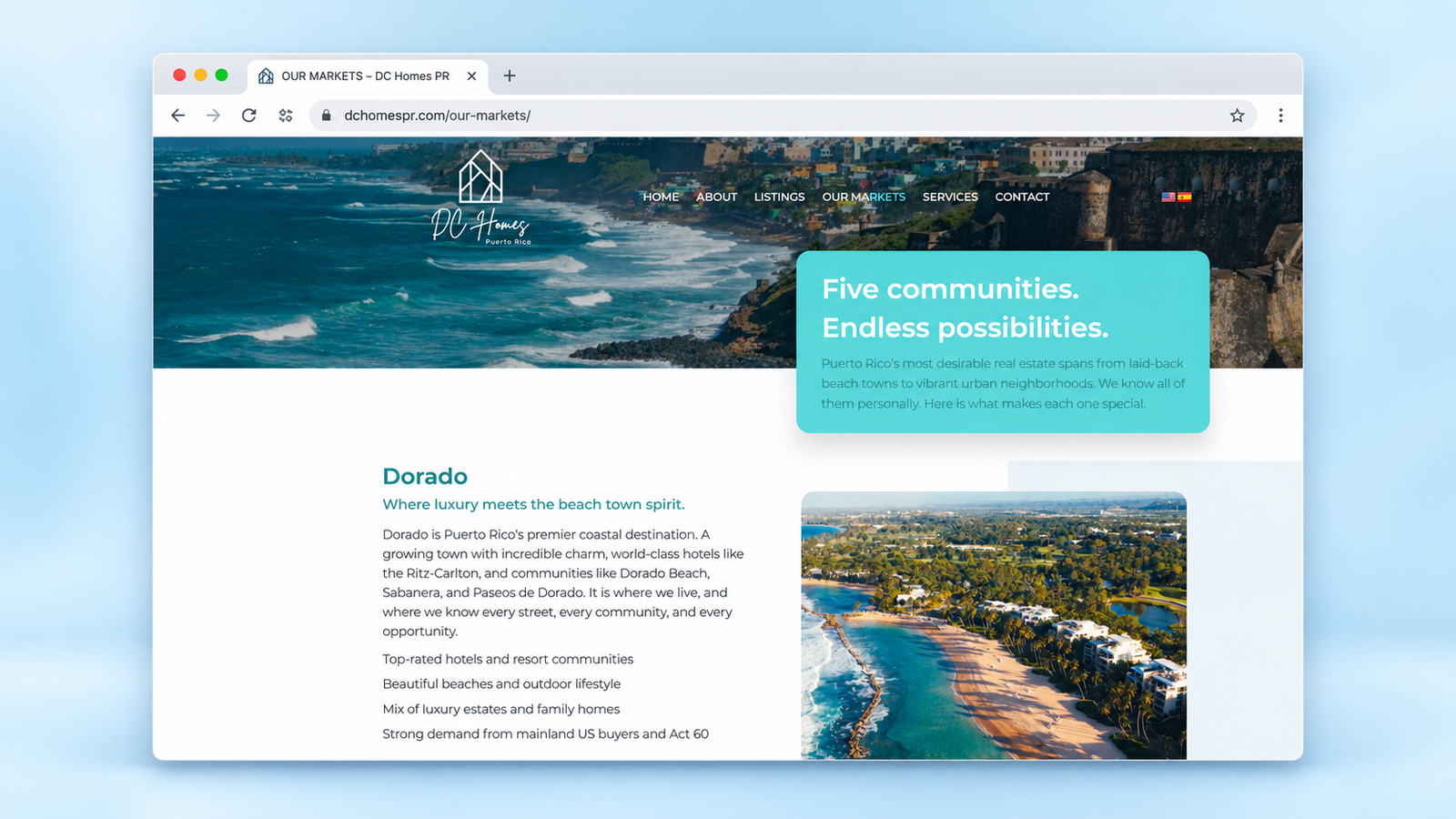
Dorado, Vega Alta, San Juan, Condado and Rio Grande, each with its own guide.
Bilingual delivery. One set of content and one set of URLs, switchable from the header on every page.
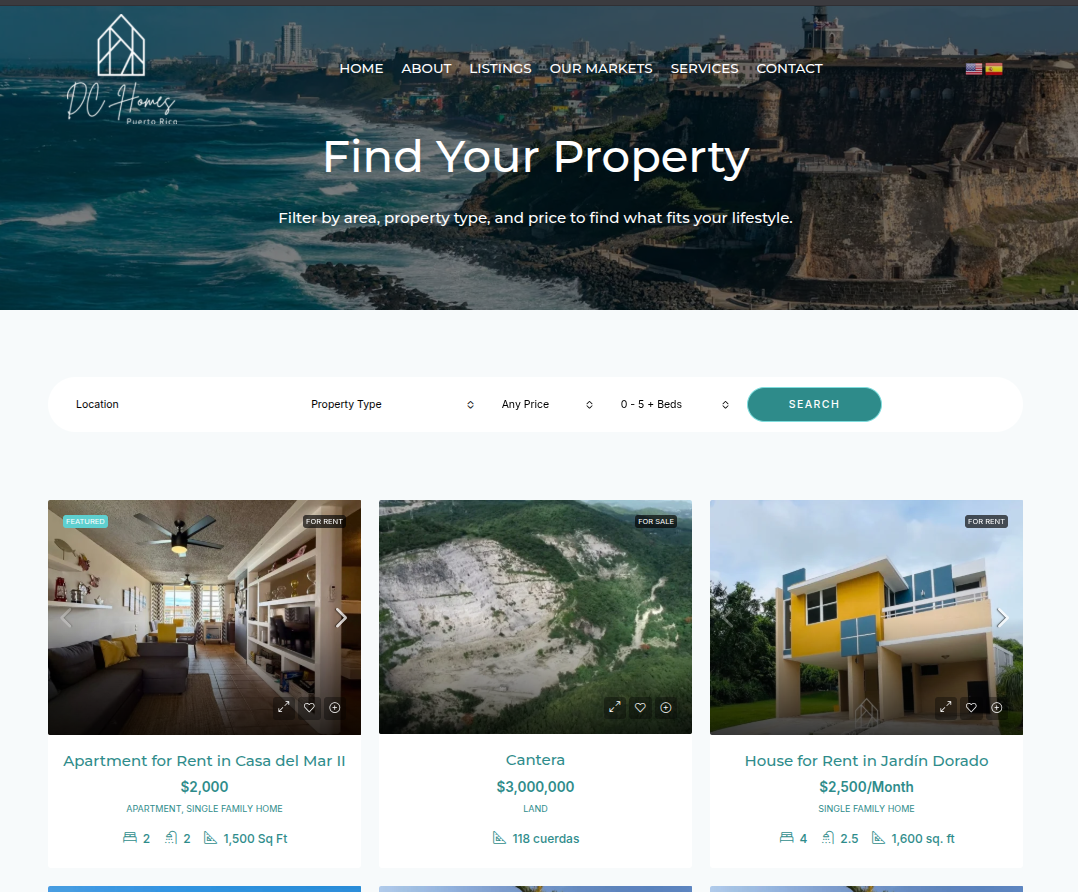
Listing systems. The brokerage’s own catalog and a full MLS search, on one page as two labeled surfaces.
A real estate platform for a two principal Puerto Rico brokerage, built so a small team can publish its own inventory while still showing the whole island market.
DC Homes PR, led by founder Diana Cintron-Faure with Jose Luis Faure as partner and business strategist, working across Puerto Rico from Dorado.
Island-wide real estate website with an owner-published property catalog, a full MLS search and an editorial market section.
Puerto Rico, with five markets given their own guide: Dorado, Vega Alta, San Juan, Condado and Rio Grande.
Buyers relocating from the mainland United States, residents already on the island, plus sellers and renters. Both groups routed separately from the home page.
Built on WordPress with the Houzez property platform and Elementor Pro, so the brokerage publishes and edits its own listings and pages.
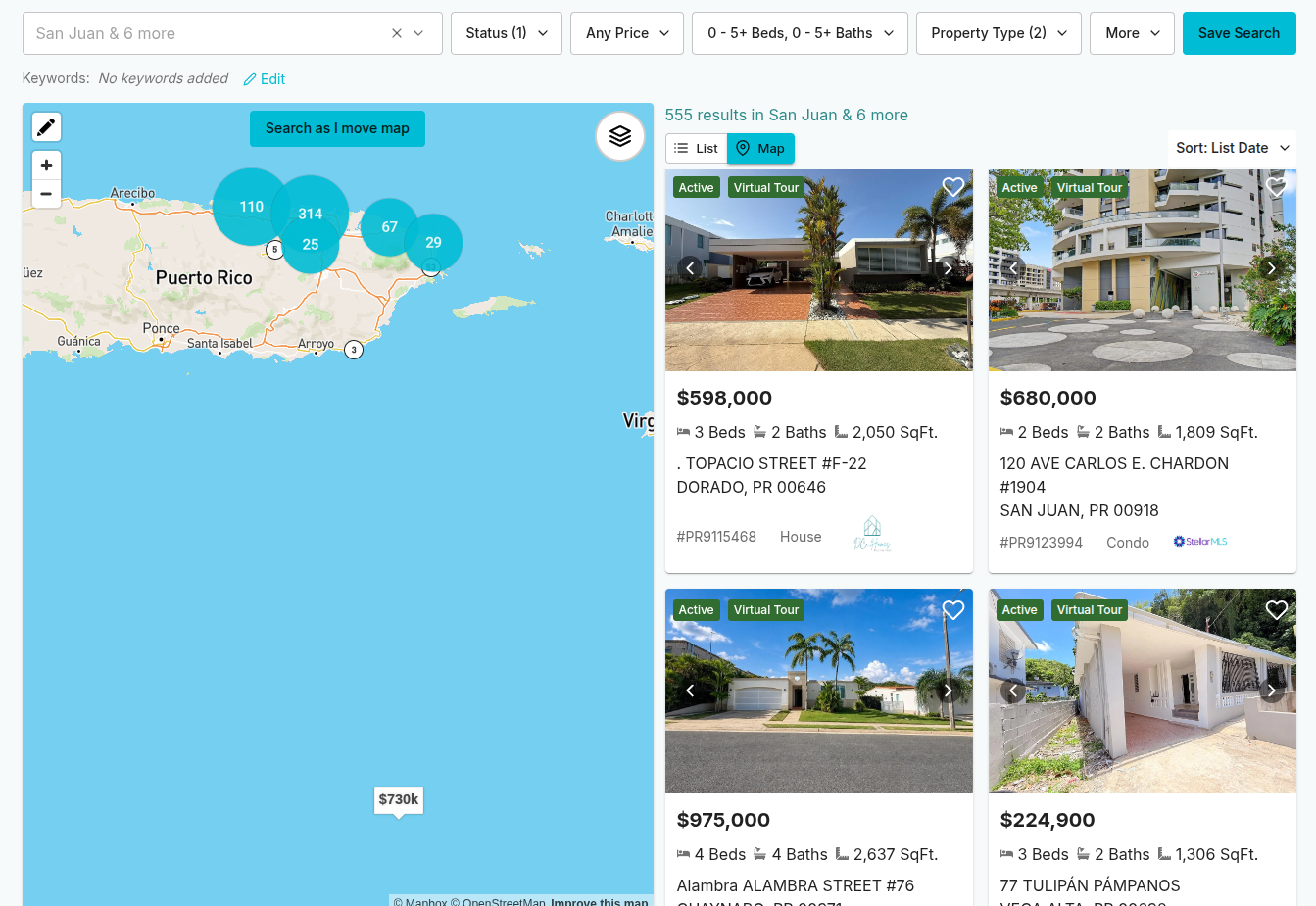
A catalog the brokerage owns, alongside a live island-wide MLS search integrated through iHomeFinder.
Strategy, UX and information architecture, UI design, full development, MLS search integration, and bilingual delivery.
A boutique brokerage has a handful of its own listings and a market of thousands. Show only your own and the site looks empty. Show only the feed and your own work disappears into it.
The brokerage’s own listings and the wider MLS answer different questions. Merged into one feed, the firm’s own work becomes indistinguishable from thousands of other records.
Someone relocating from the mainland cannot use a price filter yet. They do not know whether they want Dorado, Condado or Rio Grande, and the map means nothing to them.
In Puerto Rico the buyer and the seller in a single transaction frequently read different languages. A site in one of them serves half the market.
And a scale problem underneath. This is a two person brokerage. Anything that needed manual upkeep, a duplicated Spanish site or a hand built page per area, would have fallen behind within a season.
Structured property records the brokerage creates and edits directly, rendering consistently everywhere they appear.
Live market inventory with a map, filters and saved searches, so the site never looks thinner than the market it serves.
Both languages across the whole site, including property records, without maintaining a second version of everything.
Editorial coverage of the markets the firm actually works, so an off-island buyer can choose an area before a property.
A meaningful share of the inventory is land rather than housing, and most residential themes cannot represent it properly.
Positioned for the island without tipping into holiday brochure, and calm enough to sit behind photography.
Before any design work we mapped how people genuinely shop for a home in Los Angeles. That map became the information architecture, and it decided every page type on the site.
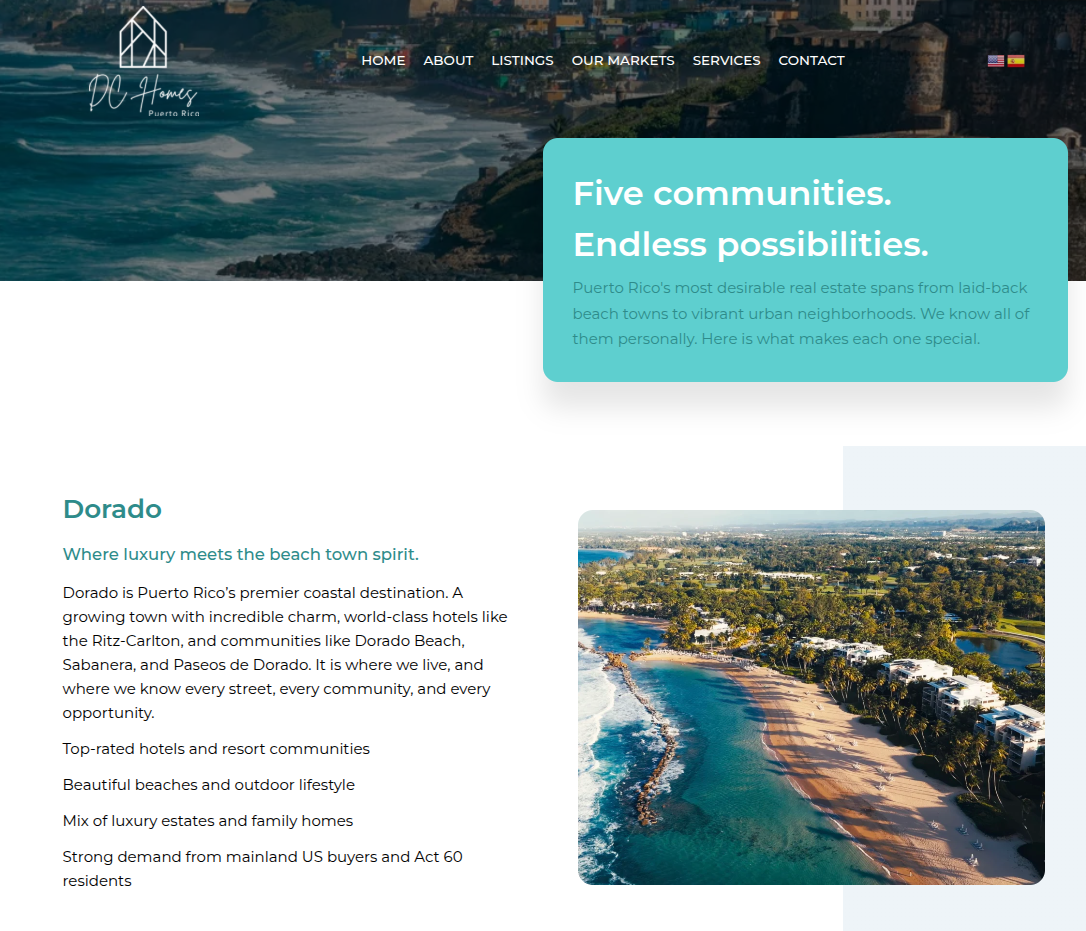
Where luxury meets the beach town spirit.
The firm’s home market — resort communities, beaches, and the strongest mainland demand.
Puerto Rico’s hidden coastal gem.
North coast living at a more accessible price point, next door to Dorado.
The heartbeat of Puerto Rico.
The metropolitan option, for buyers who want the capital rather than the coast.
The Miami Beach of Puerto Rico.
Urban walkability and beachfront in the same postcode.
Nature, luxury, and opportunity combined.
The rainforest edge, for buyers who want green rather than concrete.
An off-island buyer cannot choose a property before they choose a coast. We built one guide template and used it for the five markets the firm actually works, each opening on a single line that positions the place: Dorado where luxury meets beach town, San Juan as the heartbeat, Condado as the Miami Beach of Puerto Rico.
The layout alternates text and photography down the page, so five markets read as one continuous piece rather than five stacked blocks.
Once someone has shortlisted two neighborhoods, general guides stop helping. We created dedicated comparison experiences that evaluate both areas against the same criteria in the same order, covering lifestyle, housing and everyday access, so the two are genuinely comparable rather than described separately.
These pages meet buyers at the point of highest intent, and route straight into the relevant guide and the live listings for either area.
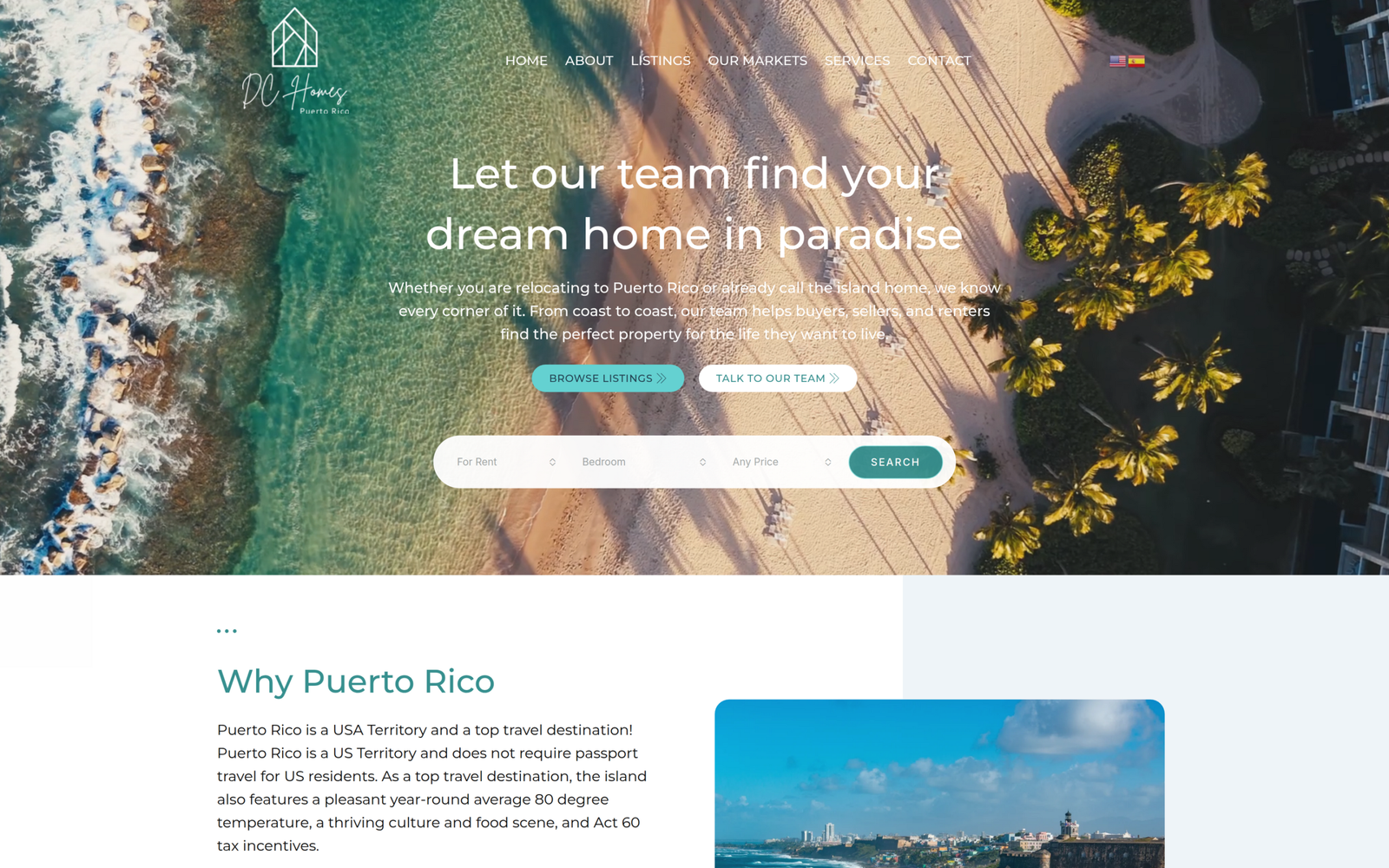
Almost everything a visitor sees is generated from structured content rather than hand built. Five market guides share one template, the property card is a single component used in the catalog, the search results and the featured row, and the search itself sits in the home page hero rather than behind a menu item.
That is what lets two people run an island-wide property site. The weight of the website is in the records and the guides, not in a large page tree that has to be maintained page by page.
A single-weight display face against a full-range grotesque, and a fourteen-value palette defined once in the Elementor global kit.
Dorado · Vega Alta · Condado
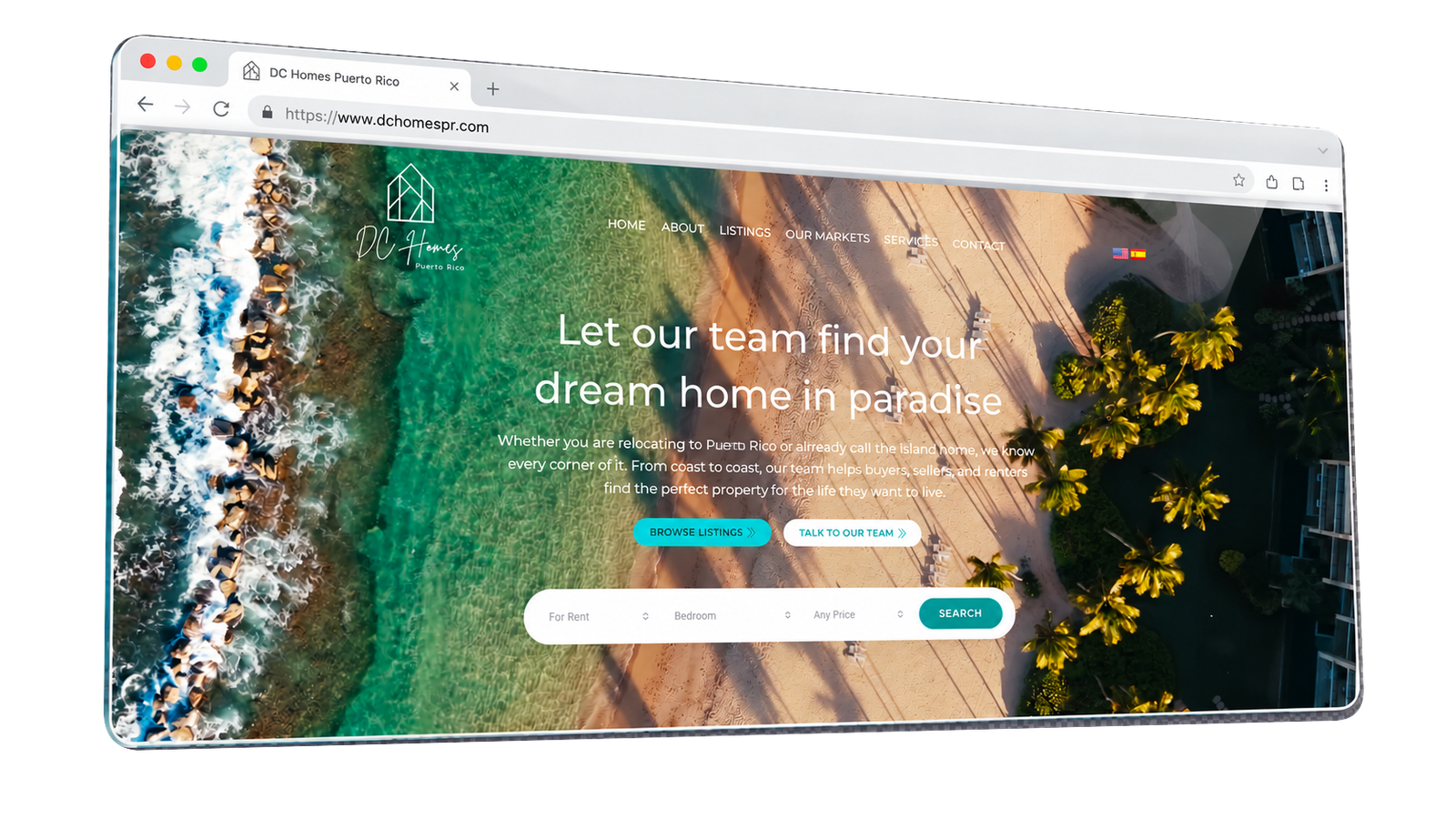
Whether you are relocating to Puerto Rico or already call the island home, our team helps buyers, sellers and renters.
Body copy is set in the regular weight, with 500 reserved for interface labels and 600 for headings within content — three weights doing the whole hierarchy.
Explore our markets
Teal — primary
Teal, light — secondary
Teal, pale — accent
Deep teal — body text
Navy — dark surfaces
Sand — warm ground
Two capabilities carry this project. One puts the whole Oahu market inside the site. The other lets a single set of pages sell to two language markets without becoming two websites.
Keeping them separate preserves the value of the firm’s own listings while still giving visitors access to the wider market.
Dual mode search where sale and rental are a toggle inside one journey, with price bands that reconfigure between a rental scale and a seven figure sale scale.
Map first for outsiders, with clustered pins across the island so a mainland buyer can see where a property sits before the price means anything.
Listing detail with a full screen gallery, tour scheduling by date, and an enquiry form pre-filled with the address and reference.
Island wide reach, from the home markets of Dorado and Vega Alta out to Cabo Rojo, Corozal, Ponce and Vieques.
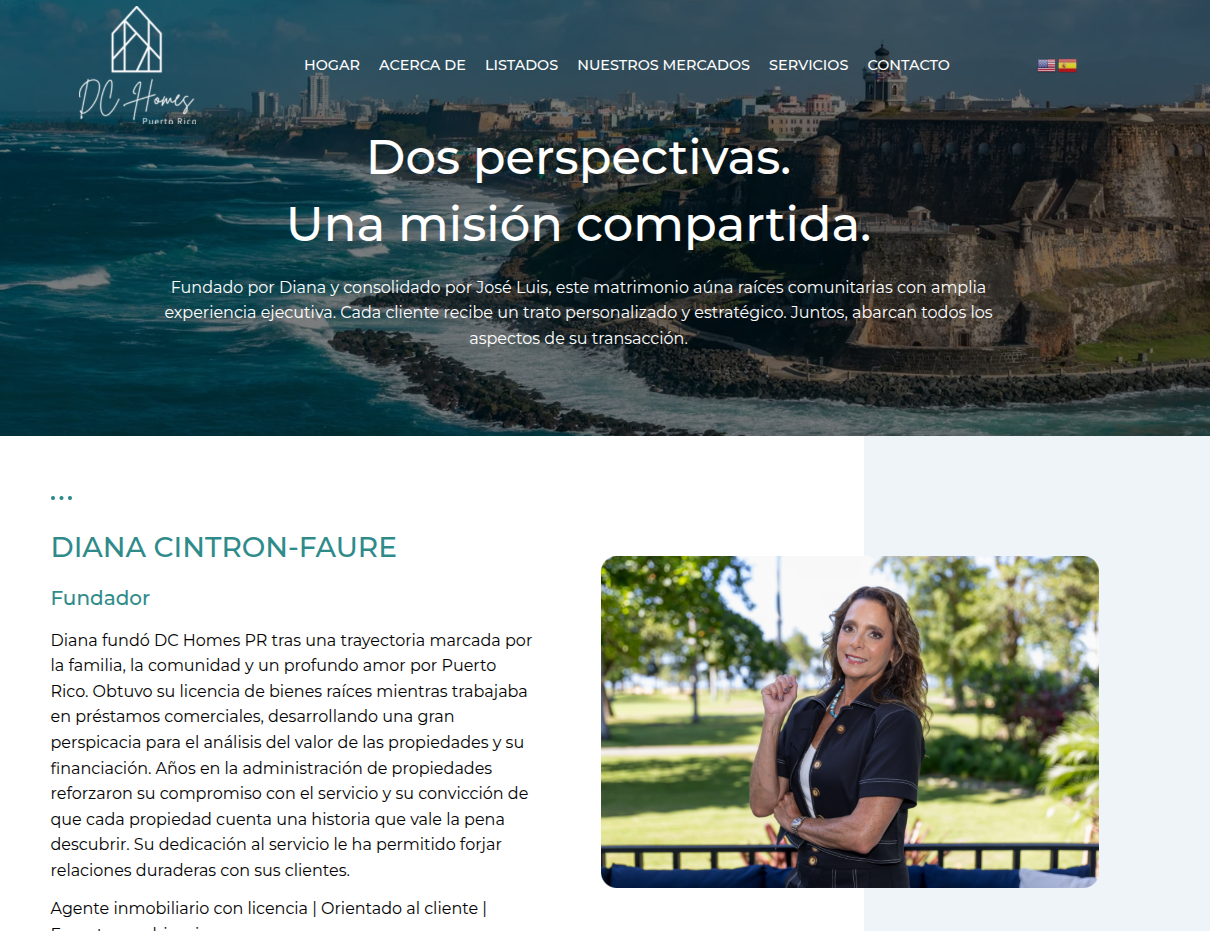
Language selection is built into the header across the site, with just two options that reflect the languages the business actually serves.
Translations are handled within the same page structure and URLs, keeping content easier to manage and reducing the risk of listings or guides becoming inconsistent.
It follows the visitor across market guides, service pages and property records, not just the marketing copy.
Layouts allow for expansion, since Spanish runs roughly fifteen to twenty per cent longer than the equivalent English.
Why it matters here: the buyer and the seller in one Puerto Rico transaction often read different languages.
We build the system, not just the pages. A structured catalogue your team publishes into, MLS search integrated alongside it, and a design system defined once and applied everywhere — on WordPress, handed over working.